
By Stanley — Founder, NovaDyne · October 2026 · 5 min read
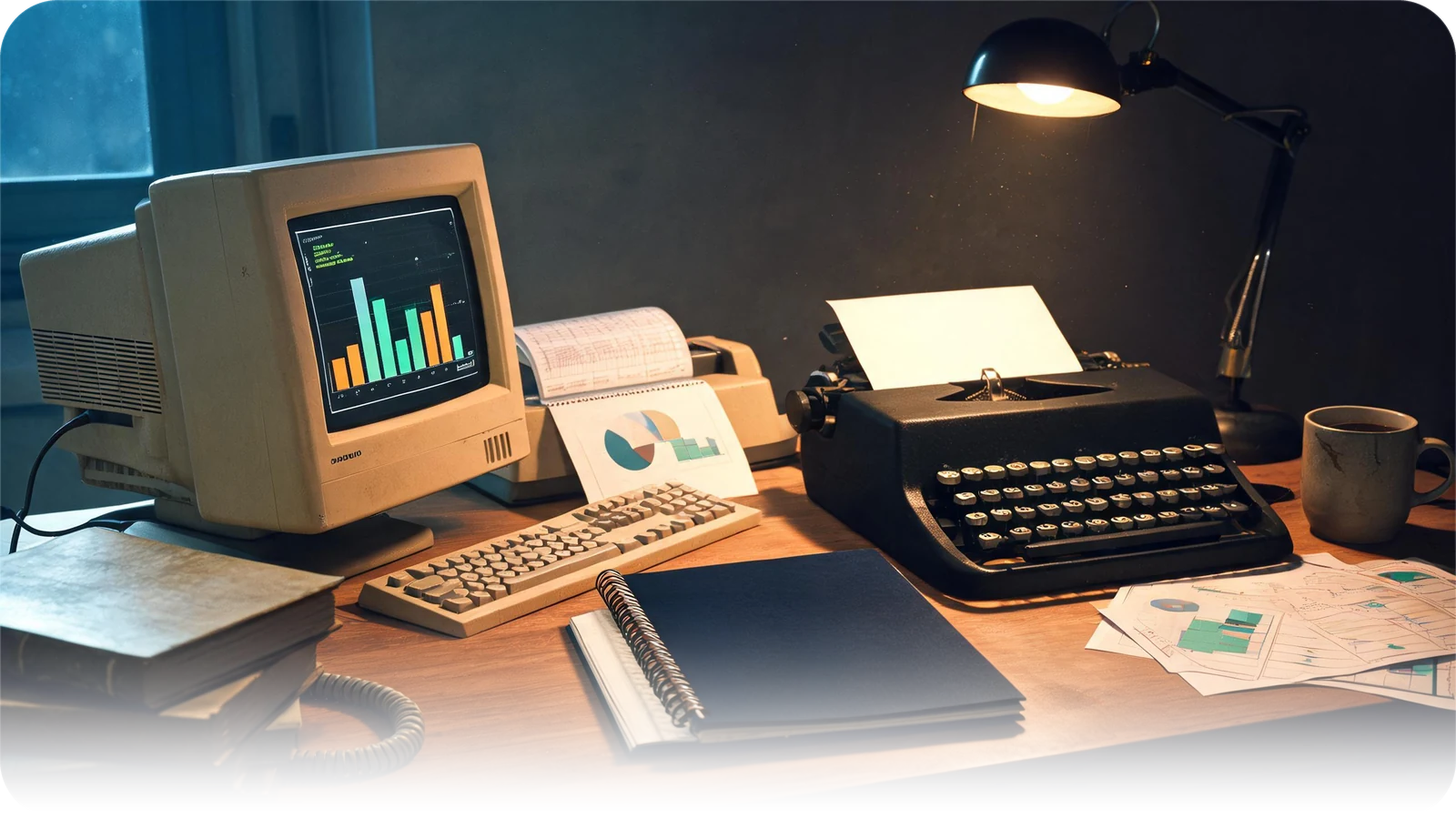
Same assignment. Two very different tools.
In the early 1990s I was doing my degree. One of my assignments needed bar charts, pie charts and line charts.
Most of my classmates typed their words on a typewriter, then drew their charts by hand with a ruler and coloured pens. I did everything on a PC. I typed the words, made the charts, and printed it all out in the same style. The words and the charts matched perfectly, page after page. Then I had the whole thing neatly bound. It was clean, accurate and easy to read. Honestly, it was better than anything in the class.
My instructor did not care about any of that.
I got a B.
Some classmates who drew their charts by hand got an A. So I went to my instructor and asked why.
His answer: “You cheated. You used a computer.”
I have never forgotten that.
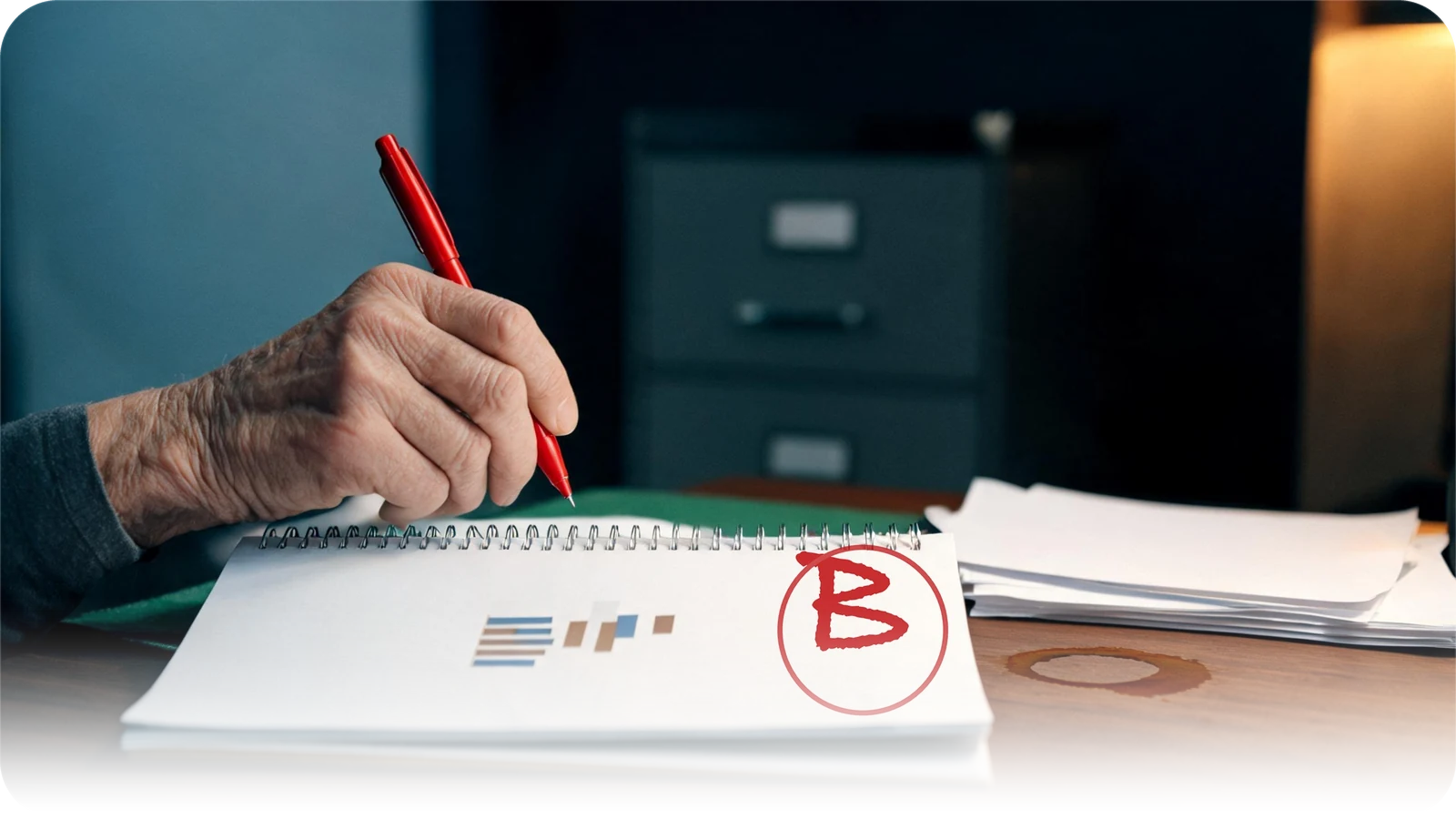
The neatest report in the class. Marked down for how it was made.
Today, nobody draws charts by hand. Every office worker uses a computer. Every student types their assignments. Schools and universities now teach computer skills as a normal part of class.
But they started teaching it about ten years after the real world had already moved on. For those ten years, students left school without the skills that employers were already asking for. The tool I was punished for using became the tool everyone was expected to know.
AI is today what the PC, Lotus 1-2-3 and Microsoft Office were in the 90s. It is a tool. A very powerful one, but still a tool.
And it is moving much faster than the PC ever did. New AI tools come out every few months, and each one can do more than the last. In a few years, using AI at work will be as normal as using email or a spreadsheet.
The problem is that our education system moves slowly. The gap between what students learn in school and what they will face at work was already there. With AI, that gap is getting wider every year.
Right now, I see many schools spending their energy on finding ways to catch and punish students who use AI.
I understand the worry. Nobody wants students to stop thinking for themselves. But this is my instructor again, giving me a B for using a PC.
Banning a tool does not stop the future from coming. It only means our young people walk into it unprepared.
Instead, schools and universities should be asking:
How do we teach students to use AI well? How to ask good questions, how to check the answers, and how to spot when AI gets it wrong.
How do we change our assignments? If AI can do the homework in ten seconds, maybe the homework needs to change — not the student.
How do we teach the human part? Judgement, creativity, honesty, and knowing what is worth saying. AI cannot replace these. It can only make them stronger.

Teach them to use it, check it and question it.
If we wait another ten years, a whole generation will finish school and find that the workplace has left them behind. That does not just hurt them. It slows down our economy, our country, and our progress as a whole.
It is not just schools. Many people today are quick to criticise anything made with AI. You see the comments everywhere: “This is AI rubbish.”
Some of it is rubbish. There is a lot of lazy, low-quality AI content out there — written with no thought, no checking, and nothing real to say.
But not all AI content is the same. We need to learn to tell the difference.
Bad AI content is when someone types one line, copies whatever comes out, and posts it. No ideas of their own. No checking. No care.
Good AI content is when a person brings their own experience, their own ideas and their own judgement — and uses AI to help with research, structure and proofreading. The human leads. The AI helps.

The human leads. The AI helps.
It is the same as a calculator. A calculator does not make you good at maths. But someone who understands maths and uses a calculator will work faster and make fewer mistakes than someone doing it all by hand.
In the end, the question is not “Did you use AI?”
The question is “How smart are you, and how well do you use the tools you have?”
That was true for the PC in the 90s. It is true for AI today.
By the way — this article was written exactly that way. The story is mine, and so are the opinions. AI helped me shape the words, tidy the structure and check my spelling.
I hope no one gives me a B for it.
So here’s my question for you: if you are a teacher, a parent or a student — is your school teaching AI, or trying to catch it? Tell me in the comments on LinkedIn · Facebook · X — I read every one.
Stanley is the founder of NovaDyne, an AI-first software company — novadyne.io
Previously from the founder: What is AI, actually? →